
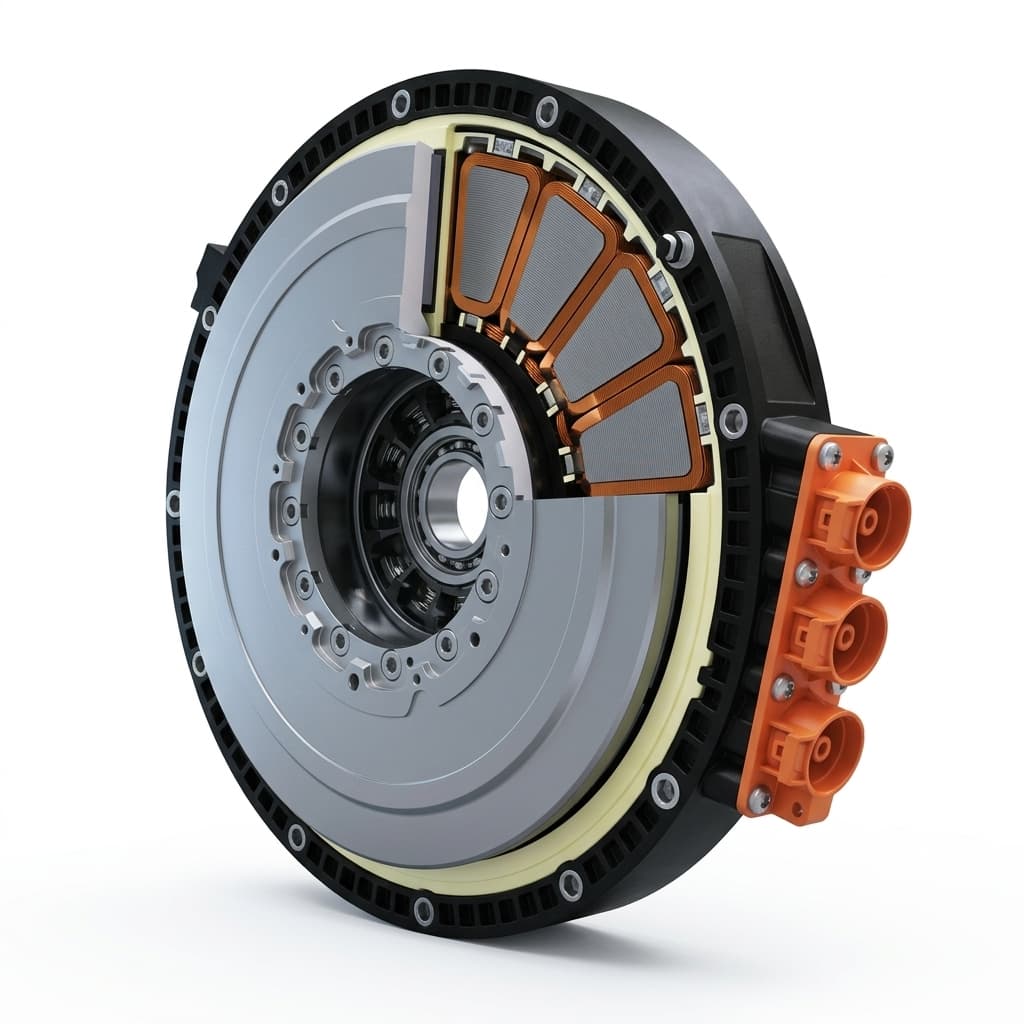
Foxconn-Magnax and PanGood: Axial Flux Motor Mass Production Scales Up
Foxconn-Magnax and PanGood show axial flux motor mass production moving into Asian foundries. Compare capacity, sourcing risks, RFQ actions, and evidence gaps.
Decision-Level Conclusion: By July 2026, the axial flux permanent magnet (AFPM) motor supply chain officially crossed the capacity chasm for third-party procurement. Unlike the captive, vertically integrated Mercedes-Benz/YASA production line, the €35.5 million controlling investment by Foxconn’s Pan-International in Belgian deep-tech firm Magnax, paired with Pan-Good Power’s launch of a 300,000-unit automated line in Lanxi, China, establishes a robust, open-market foundry ecosystem in Asia. Buyers can now source high-volume, precision AFMs without paying premium prototype penalties, expanding applications beyond hypercars into humanoid robotics, heavy trucks, and eVTOLs.
Scope and date note (reviewed July 29, 2026): This analysis covers the March 16, 2026 Foxconn-Magnax equity announcement and the July 29, 2026 Pan-Good Power (盘毂动力) mass production milestone. Designed for OEM procurement, Tier 1 sourcing, and drivetrain engineering teams, this report evaluates the transition of AFM manufacturing from European boutique labs to Asian mega-foundries. Use this to inform your next RFQ cycle and update your DFM (Design for Manufacturing) guidelines.
Teams comparing this news against existing sourcing choices should pair it with the SMC versus laminated axial flux core guide, the YASA, AFIR, and TORUS topology sourcing guide, and the earlier Mercedes-Benz axial flux motor production analysis.
What Changed: The Rise of Third-Party AFM Foundries
Previously, buyers faced a stark choice: either develop AFM manufacturing internally (the Mercedes-Benz/YASA route) or rely on low-volume, high-cost European job shops. The events of early-to-mid 2026 shatter this bottleneck by pairing European topological innovation with Asian automated precision.
Foxconn’s Pan-International acquired a 52% controlling stake in Magnax for €35.5 million, injecting the capital and robotics expertise needed to scale production to millions of units. Simultaneously, Pan-Good Power activated five fully automated production lines in Lanxi, achieving unprecedented scale for independent buyers.
| Dimension | Pre-2024 (European Labs / Low Volume) | 2026 Shift (Foxconn/Magnax & Pan-Good) | Impact on OEM Sourcing |
|---|---|---|---|
| Primary Sourcing Model | Boutique job shops or internal R&D | Open-market contract manufacturing (Foundry) | Enables Tier 1s to outsource stator/motor production |
| Annual Capacity | 1,000 - 5,000 units | 300,000+ units (Pan-Good Lanxi facility) | Supports mass-market EV and robotics scaling |
| Assembly Approach | Heavy manual alignment, high scrap | 152 automated steps, robotic handling | Drastically reduces labor cost and quality variance |
| Target Yield Rates | ~70-80% | Above 98% reported by automated lines | Predictable pricing and stable lead times |
| Core Supply Base | Highly fragmented EU/US niche suppliers | Consolidated Asian supply chain | Lower logistics costs and tighter integration |
| Capital Backing | VC seed / Series A | €35.5M industrial capital (Foxconn) | Long-term financial stability for supplier viability |
| Target Applications | Hypercars, bespoke aviation | Humanoid robotics, heavy duty, EVs | Drives down unit cost through volume aggregation |
| Stator Tolerance | Variable, relying on manual shimming | Strict SMC & Lamination DFM controls | Forces Tier 2 suppliers to upgrade inline metrology |
| Strategic IP Role | Retained strictly in-house | EU designs manufactured in Asia | Accelerates global tech diffusion and standardization |
| Procurement Stance | R&D budgeting, single-source risk | Standardized RFQ, multi-source potential | Procurement teams regain negotiation leverage |
The Evidence: Two Pillars of the Asian Supply Chain
1. Foxconn and Magnax: Capital Meets Scale
On March 16, 2026, Pan-International Industrial Corp. (part of the Foxconn group) announced a €35.5 million investment round in Belgian deep-tech firm Magnax. The two-stage capital increase injects the capital and robotics expertise needed to industrialize yokeless axial flux alternatives. While R&D remains in Kortrijk, Belgium, mass production shifts to Asia. Foxconn aims to secure a 5% share of global robotics components by 2030, and Magnax's axial flux technology is a critical piece for humanoid robot hips and joints, as well as AI data center cooling drives.
2. Pan-Good Power's Automation Breakthrough
By July 2026, Chinese supplier Pan-Good Power achieved large-scale production at its Lanxi, Zhejiang base, with orders booked into 2027 across 30+ countries. Overcoming the immense magnetic assembly forces that historically restricted AFM production, their facility boasts five fully automated lines. The process involves 152 automated steps with a reported yield rate exceeding 98%. Beyond independent production, Pan-Good has partnered with Tier 1 giants like Valeo to co-develop integrated Axial Flux Generator Systems. Furthermore, through a collaboration with the Ningbo Institute (CAS), they implemented a high-temperature-resistant neodymium formulation, solving thermal degradation issues in high-torque scenarios.
Why It Matters for Buyers and Engineers
For procurement teams, the "high-cost, low-volume" objection to axial flux architecture is no longer valid. You can now request quotes from Tier 1 suppliers based on standardized, high-volume Asian manufacturing costs. If you are turning this into a supplier package, anchor the RFQ around AFPM SMC stators, axial flux motor core, SMC stator segments, and documented manufacturing quality evidence.
For motor design engineers, this unlocks new platforms. Because foundries can handle the treacherous "wedding" phase (joining stators and rotors under intense magnetic attraction) via robotics, engineers can specify AFMs for mass-market applications like humanoid robots, where compact axial length and high torque-density are non-negotiable.
Risks, Limits, and Boundaries (Risk Matrix)
While the shift to mass foundry production solves volume issues, buyers must navigate new constraints. Below is a structured risk matrix evaluating boundaries and evidence gaps.
| Risk Dimension | Trigger Condition | Impact Level | Mitigation / Buyer Strategy | Evidence Gap / Verification Need |
|---|---|---|---|---|
| Geopolitical & Supply | High reliance on Chinese manufacturing (Lanxi) & rare earths | Critical | Dual-source if possible, though alternative 300k+ lines do not yet exist outside Asia. | Long-term impact of Western tariffs on Pan-Good components remains untested. |
| Stator Tolerance | Tier 2 suppliers fail to meet sub-0.1 mm dimensional variance | High | Demand automated optical inspection (AOI) data logs per batch from Tier 1s. | Manual QA is obsolete; need independent validation of Lanxi’s 98% yield claim at max capacity. |
| Thermal Degradation | Continuous high-torque applications exceeding 150°C | Medium | Specify CAS-certified high-temperature neodymium magnetic steel in RFQs. | Independent third-party lab testing required to verify continuous-power cooling efficiency. |
| Architecture Lock-in | Designing around proprietary Foxconn/Magnax topologies | Medium | Standardize mechanical interfaces; avoid deep proprietary integration where possible. | Wait for clear standardization of Yokeless vs. YASA topologies in the broader market. |
- Applicability Boundaries: This foundry model applies to high-volume commercial needs (robotics, commercial EVs, drones). For highly bespoke, captive applications (e.g., Mercedes-Benz AMG), vertical integration (via YASA) remains the standard.
- Evidence Gaps: The 98% yield claim by Pan-Good Power relies on early production data and supplier statements. Independent verification of this yield over a multi-year, multi-shift production run is still pending.
- Buyer Next Step: Convert the risk matrix into RFQ worksheet inputs, then send the annual volume, duty cycle, cooling target, and inspection gate to Axialfluxcore before freezing an AFPM supply plan.
Who Should Act Now (Action Checklist & Thresholds)
- Procurement Managers: Revise AFM cost models. Stop using 2024 prototype pricing.
- Action Threshold: If your annual volume exceeds 10,000 units, request updated RFQs reflecting Asian foundry pricing structures immediately.
- Robotics Engineers: Re-evaluate hip and knee joint actuator designs.
- Action Threshold: If you are designing for humanoid deployment in 2027/2028, assume standard yokeless configurations will be available as COTS (commercial off-the-shelf) components. Do not design custom motors from scratch.
- Tier 2 Stator Suppliers: Implement automated 100% inline inspection for stator components.
- Action Threshold: If your current scrap rate is above 2%, halt manual QA. The Foxconn and Pan-Good lines will reject batches with minimal variance.
Yield and Automation Implications
FAQ
Q: Are these Asian foundries producing the same designs as Mercedes-Benz? A: No. While both use axial flux architectures, Mercedes-Benz relies on YASA IP (which they own) for captive production. Magnax and Pan-Good possess distinct proprietary topologies targeting third-party OEMs and robotics.
Q: Does Foxconn's investment mean Magnax will only supply Foxconn? A: Pan-International is a contract manufacturer. The goal of the investment is to make Magnax technology available to a wide array of global customers across EVs, robotics, and industrial automation.
Q: Why was the "Wedding" phase a bottleneck? A: Assembling the stator between two high-power rotor discs generates tremendous axial magnetic pull. Manual assembly often resulted in crushed stators or misaligned air gaps. Robotics ensure perfect alignment under load.
Sources
- Pan-International and Partners Invest €35.5 Million to Industrialize Belgian Axial Flux Motor Technology (Traxial / Magnax Press Release, March 16, 2026)
- Chinese supplier ramps axial flux motor production to 300,000 units for 30+ markets (CarNewsChina, July 29, 2026)
- Valeo partners with PanGood to co-develop a high-efficiency integrated Axial Flux Generator System (Valeo Official, April 23, 2025)
(Note: While these events signal massive progress, always validate specific thermal and continuous-power metrics through independent lab testing before freezing your drivetrain architecture.)
Article-to-RFQ Workflow
Turn this guide into an evidence-ready RFQ.
Use the article context as the starting point, then align CAD status, magnetic targets, validation scope, and release records before asking suppliers to quote.
Capture the decision
Identify the topology, product family, operating point, and current gate before the article takeaway becomes a supplier question.
Attach buyer inputs
Prepare drawing status, magnetic targets, quantity plan, destination, and open risks in the RFQ worksheet.
Request evidence
Ask for DFM notes, first article inspection, magnetic validation, traceability, and packaging release files before price comparison.
Author

Categories
More Posts
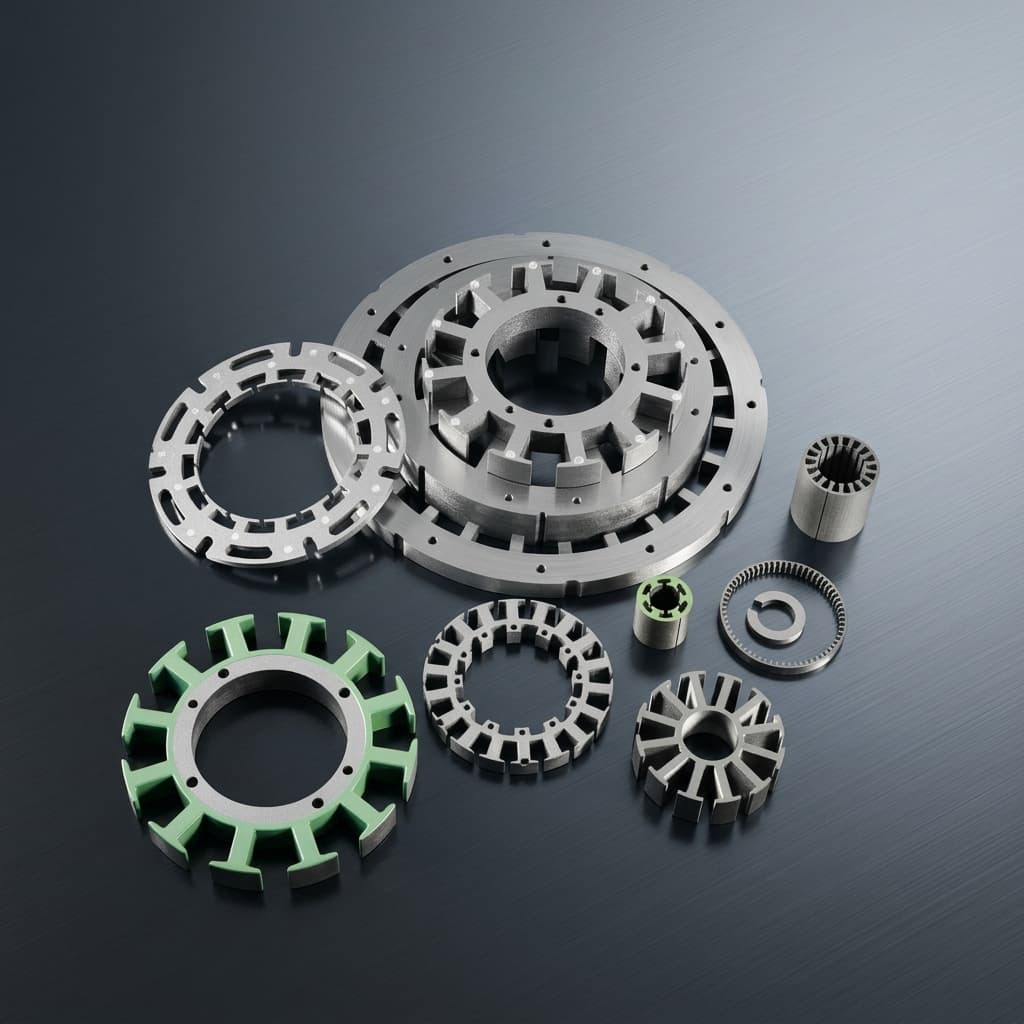
SMC vs. Laminated Steel for Axial Flux Motor Cores: A Procurement & Engineering Guide
An in-depth guide for procurement teams and engineers evaluating Soft Magnetic Composites (SMC) against laminated steel for axial flux motor cores.
Axial Flux Motor Topologies (YASA, AFIR, TORUS): A Core Sourcing & Procurement Guide
Compare YASA, AFIR, and TORUS axial flux motor topologies for stator core sourcing, SMC vs laminated steel choices, RFQ risk control, and DFM review.
Thermal Management in Axial Flux Motors: Direct Oil Cooling and Stator Core Design
Engineering guide to axial flux motor thermal management, direct oil cooling, SMC stator design, validation risks, supplier evidence, and RFQ checks for buyers.