WhatsApp
Axial Flux Core LogoAxial Flux Core
  • Home
  • Contact Us
Start inquiry
Axial Flux Core LogoAxial Flux Core

SMC axial flux motor core and AFPM stator OEM support for advanced electric drive teams.

Inquiry Email

[email protected]

Email app

Attach STEP/DXF/PDF plus frequency, flux density, sample quantity, annual forecast, and destination.

Instant Chat

+8618857971991

Chat on WhatsApp

Direct response from our engineering team.

Core Products
  • Product Portfolio
  • Axial Flux Motor Core
  • AFPM SMC Stator
  • SMC Stator Segments
  • YASA Segmented Stator Teeth
  • 3D Isotropic Flux Core
  • Lamination & Winding Services
  • Custom Compaction Tooling
Applications
  • Applications Overview
  • eVTOL Axial Flux Cores
  • Humanoid Joint Stators
  • Drone Propulsion Cores
  • EV Supercar AFPM Cores
  • Compact Generator Cores
Manufacturing & Quality
  • OEM Capability Hub
  • Technology & Materials
  • SMC Core Manufacturing
  • Manufacturing & Quality
  • Axial Flux Stator Prototyping
  • Compaction Tooling DFM
  • Magnetic Loss Validation
  • AFPM Manufacturing Route Tool
  • AFPM Core Design Checklist
  • AFPM Air Gap Design Tool
  • AFPM Cooling Design Tool
  • AFPM Cogging Torque Tool
Resources
  • Blog
  • About
  • Contact / RFQ
  • Engineering Resources
  • Privacy Policy
  • Cookie Policy
  • Terms of Service
© 2026 Axial Flux Core. All Rights Reserved.|Backed by Linkup Ai Co., Ltd. with axial flux core manufacturing support in Shenzhen and Dongguan, China.
Legal entity: Linkup Ai Co., Ltd.
← Back to Products

Axial Flux Motor Core

Custom axial flux motor core and SMC stator manufacturing support for 3D flux paths, RFQ datasheet ranges, insulation coating, and prototype validation.

Target Buyer:Best for motor R&D, sourcing, and supplier-quality teams that already have an axial flux electromagnetic concept and need a manufacturable SMC core or stator part before tooling commitment.
Request Custom QuoteDownload RFQ Templates
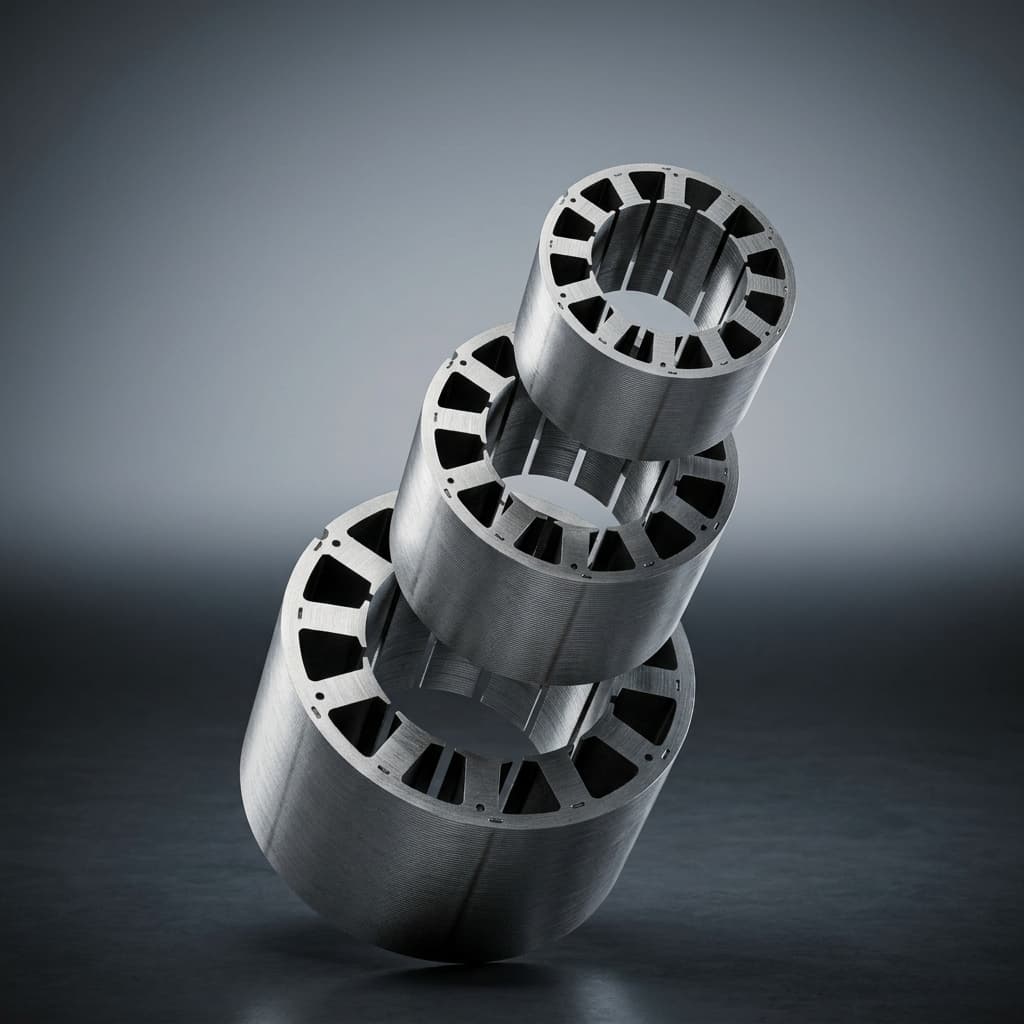
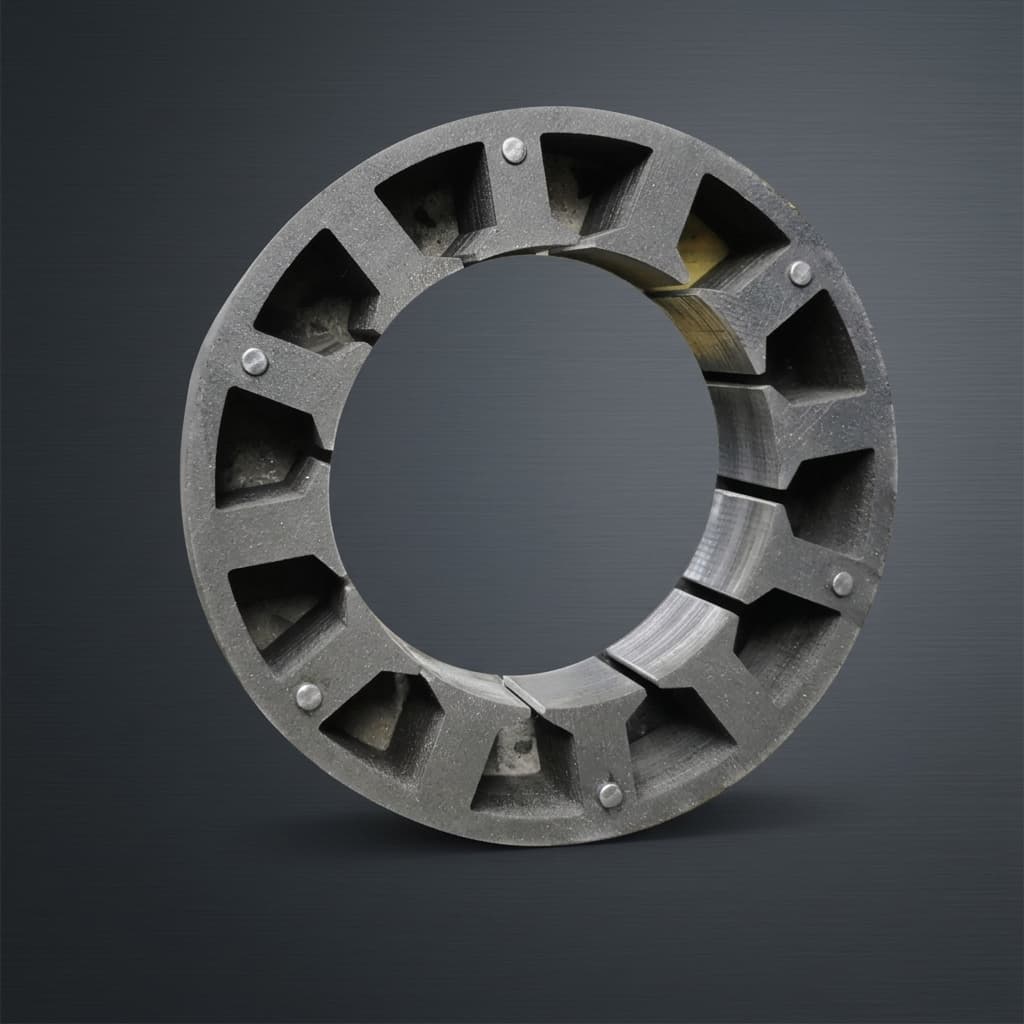
High fidelity render of an axial flux motor stator core

Capability Highlights

  • Circular, sector/fan-shaped, segmented, and optimized 3D tooth geometry review for compact AFPM architectures
  • RFQ planning envelope covering OD 30-800 mm, ID 25 mm min., thickness 5-110 mm, and 3-112 slot or tooth features
  • Winding-ready resin insulation coating and mechanical bonding or curing scope can be reviewed before sample release
  • Prototype-to-pilot evidence package for eVTOL, drone, robotics, and advanced EV motor programs

Typical Applications

  • Axial flux traction motors
  • eVTOL propulsion machines
  • Drone propulsion and compact generators
  • Humanoid robot joint motors

Engineering Focus

  • Shape family: one-piece circular cores, sector or fan-shaped segments, segmented stators, and optimized 3D tooth or yoke features
  • SMC manufacturability: compaction direction, draft, corner radius, wall thickness, green strength, ejection, and local density balance
  • Magnetic and material target: iron loss, B-H curve, permeability, resistivity, density, temperature, and insulation behavior under the buyer operating point
  • Winding interface: resin insulation coating area, coating thickness window, Hi-pot need, slot clearance, potting boundary, and carrier or housing contact surfaces
  • Tolerance stack between core segments, windings, magnets, rotor air gap, bonding or curing process, and inspection datum plan

Engineering Datasheet

Use these ranges as an RFQ planning envelope. Final manufacturability, tolerances, density, and loss targets are confirmed after CAD, material grade, compaction direction, and validation method review.

ParameterRFQ Planning RangeEngineering Note
Supported core shapesOne-piece circular ring or disc, sector/fan-shaped segment, individual tooth, segmented stator, or optimized 3D flux featureShape selection should be reviewed against motor topology, press direction, demolding, winding access, and air-gap datum requirements.
Outer diameter review window30-800 mmApplies to ring and disc-style axial flux core concepts before part-specific tooling review.
Inner diameter planning minimum25 mm min.Lower limits depend on ejection, wall thickness, datum access, and assembly clearance.
Axial thickness window5-110 mmTall features require compaction and green-strength review before tool freeze.
Slot / pole feature count3-112 slots or tooth featuresPitch, tooth width, corner radius, and demolding direction drive the practical limit.
3D tooth / yoke feature reviewDrawing-dependent tooth height, tooth width, draft, fillet radius, slot access, and ejection clearanceOptimized 3D features must be screened for local density, edge chipping, green strength, winding clearance, and inspection access.
Material routeInsulated iron-powder SMC grade, buyer-selected or performance-selectedGrade selection should be tied to frequency, flux density, temperature, density, and loss target.
Density planning target7.4-7.6 g/cm3 target where geometry, SMC grade, and compaction route allowTreat density as a sample-specific target to verify with part weight, measurement method, and local feature review.
Winding-ready insulation coatingResin insulation coating before winding, coating area map, thickness window, visual check, and optional Hi-pot scopeCoating and insulation acceptance should be separated from magnetic loss acceptance because slot clearance and thermal path may change.
Mechanical bonding / curing scopeAdhesive bonding, resin bonding, post-press curing or stress-relief route, segment fixture, and carrier integration boundaryBonding or curing should be defined as part of the supplied core scope only when the buyer drawing and assembly process require it.
Inspection and release packageFAI, CMM or 3D scan, CTQ dimensions, density check, magnetic report, coating or Hi-pot note, traceability, and packing recordEngineering, sourcing, and supplier quality should agree which records are needed before sample release.

Process Notes

  • Use the public datasheet as RFQ planning guidance, not as a guaranteed catalog specification for every CAD shape.
  • Lock circular, sector, segmented, or 3D tooth family and compaction direction before optimizing iron-loss claims.
  • Early DFM should lock press direction, corner radius, wall thickness, ejection, datum surfaces, and winding access.
  • Separate pressed core supply, machining, resin insulation coating, bonding or curing, magnetic validation, and export packaging in the quote.
  • Prototype samples can be quoted with dimensional inspection, density check, and magnetic or insulation validation scope defined up front.

Validation Notes

  • Recommended buyer inputs: B-H curve requirement, core-loss operating point, density target, winding insulation requirement, and coating or bonding boundary.
  • Recommended reports: FAI, CMM or 3D scan, CTQ dimensions, material/process traceability, density check, coating note, Hi-pot when scoped, and agreed magnetic test results.
  • Acceptance values should reference controlled drawing revision, sample IDs, operating condition, and validation method rather than public-page planning ranges.

Evidence Pack

Audit-Ready Proof Package

For custom product RFQs, the useful proof is a controlled evidence package: drawings, material route, inspection records, validation scope, and sample acceptance notes.

Download templatesQuality controlsRequest evidence scope

Can the public datasheet envelope be connected to the buyer-controlled CAD shape before quotation?

Evidence to Prepare

Shape family, OD/ID/thickness/slot count, STEP file, 2D drawing, datum plan, CTQ list, revision ID, and DFM risk notes.

Acceptance Focus

Prevents buyers from treating a broad 30-800 mm planning range as a guaranteed tooling decision.

Can the material route and validation target be tied to the actual axial flux operating point?

Evidence to Prepare

SMC grade, density target, B-H or core-loss requirement, frequency, flux density, temperature, waveform, and magnetic test method.

Acceptance Focus

Helps R&D compare material and geometry options using the same condition the motor program actually needs.

Can winding-ready insulation, resin coating, and bonding or curing scope be audited before samples ship?

Evidence to Prepare

Coating area map, coating thickness expectation, Hi-pot scope when required, adhesive or curing boundary, visual criteria, and slot-clearance notes.

Acceptance Focus

Reduces late failures where a magnetic core sample fits the datasheet but no longer fits the winding or assembly process.

Can engineering, sourcing, and quality review the same release package?

Evidence to Prepare

FAI report, CMM or 3D scan, CTQ table, density result, magnetic or insulation report if scoped, traceability, and export packing record.

Acceptance Focus

Turns prototype cores into decision-ready records for sample approval, pilot sourcing, and repeat-order control.

Buyer CheckpointEvidence to PrepareAcceptance Focus
Can the public datasheet envelope be connected to the buyer-controlled CAD shape before quotation?Shape family, OD/ID/thickness/slot count, STEP file, 2D drawing, datum plan, CTQ list, revision ID, and DFM risk notes.Prevents buyers from treating a broad 30-800 mm planning range as a guaranteed tooling decision.
Can the material route and validation target be tied to the actual axial flux operating point?SMC grade, density target, B-H or core-loss requirement, frequency, flux density, temperature, waveform, and magnetic test method.Helps R&D compare material and geometry options using the same condition the motor program actually needs.
Can winding-ready insulation, resin coating, and bonding or curing scope be audited before samples ship?Coating area map, coating thickness expectation, Hi-pot scope when required, adhesive or curing boundary, visual criteria, and slot-clearance notes.Reduces late failures where a magnetic core sample fits the datasheet but no longer fits the winding or assembly process.
Can engineering, sourcing, and quality review the same release package?FAI report, CMM or 3D scan, CTQ table, density result, magnetic or insulation report if scoped, traceability, and export packing record.Turns prototype cores into decision-ready records for sample approval, pilot sourcing, and repeat-order control.
Buyer Inputs That Unlock the Review
  • Core 2D drawing, 3D STEP file, latest revision ID, drawing owner, and NDA status
  • Motor topology, application, target frequency, flux density, temperature window, waveform, and duty cycle
  • OD, ID, axial thickness, slot or tooth count, datum scheme, air-gap faces, winding access, and CTQ tolerances
  • Required material grade, density target, B-H or core-loss target, insulation need, and allowed material substitution if available
Release Boundary

Any released claim should be tied to the buyer drawing, sample ID, material batch, inspection method, and agreed test condition instead of a generic marketing statement.

Key Evaluation Matrix

MetricTypical RangeWhy It Matters
Custom geometry envelopeCircular, sector/fan-shaped, segmented, and optimized 3D tooth concepts within RFQ-reviewed OD 30-800 mm planning windowAxial flux programs often need shapes that do not map cleanly to conventional radial-motor lamination tooling.
Flux path suitability3D isotropic SMC geometryAxial flux machines use magnetic paths that are not naturally aligned with stacked silicon steel laminations.
Density planning7.4-7.6 g/cm3 target where geometry, SMC grade, and compaction route allowDensity affects permeability, loss behavior, mechanical strength, and the repeatability of thin tooth or sector features.
Insulation and bonding readinessResin insulation coating, optional Hi-pot scope, adhesive or curing boundary, and winding-clearance reviewA magnetic core still has to survive winding, assembly, thermal exposure, and supplier-quality release.
Dimensional controlDrawing-dependent precision machining and inspectionSmall axial air gaps make flatness, parallelism, and segment position critical to torque and noise.
Loss validationFrequency and flux-density dependent test planCore loss must be evaluated under the customer operating point, not only by catalog material data.

RFQ Checklist

  1. Core 2D drawing, 3D STEP file, latest revision ID, drawing owner, and NDA status
  2. Motor topology, application, target frequency, flux density, temperature window, waveform, and duty cycle
  3. OD, ID, axial thickness, slot or tooth count, datum scheme, air-gap faces, winding access, and CTQ tolerances
  4. Required material grade, density target, B-H or core-loss target, insulation need, and allowed material substitution if available
  5. Resin insulation coating, Hi-pot, adhesive bonding, mechanical curing, machining, or packaging scope that should be included or excluded
  6. Prototype quantity, pilot quantity, expected annual volume, validation reports needed, destination country, and timeline

Risk Controls

  • SMC geometry looks correct in CAD but cannot be compacted reliably: Run early DFM for press direction, wall thickness, corner radius, green strength, and ejector strategy before tooling freeze.
  • Thin sectors, narrow teeth, sharp corners, or tall 3D features create density variation or chipped edges: Screen local feature width, fillet radius, ejection direction, density target, visual criteria, and inspection access before committing to tool geometry.
  • Resin insulation coating solves winding protection but changes slot clearance or thermal path: Define coating area, thickness window, masked surfaces, Hi-pot scope, winding clearance, and thermal assumptions before sample approval.
  • Bonding or curing is assumed to be included in the core supply scope: Separate pressed core, machining, coating, adhesive bonding, curing, carrier integration, and packaging as line items in the RFQ.
  • Prototype magnetic data does not match final duty cycle: Define frequency, flux density, temperature, and test coupon method before comparing material options.
  • Public planning ranges are treated as guaranteed dimensions without CAD and tooling review: Tie every quote to drawing revision, shape family, DFM review, material grade, and validation method before sourcing decisions.

Product Gallery

Complete AFPM motor assembly high fidelity render
High fidelity render of SMC motor core
AFPM stator core engineered for electric vehicles

Buyer FAQ

Is this a full axial flux motor?

The focus is the magnetic core or stator component. We support manufacturable SMC core parts that motor OEMs can integrate with their windings, magnets, rotors, housings, and drives.

What axial flux core shapes can be reviewed?

We can review one-piece circular cores, sector or fan-shaped segments, segmented stator concepts, individual teeth, and optimized 3D tooth or yoke features when the buyer provides CAD and operating requirements.

Are the 30-800 mm and 3-112 slot ranges guaranteed?

No. They are RFQ planning ranges. Final manufacturability depends on CAD geometry, SMC grade, compaction direction, demolding, density target, tooling route, and validation method.

Can winding-ready insulation coating be included?

Yes, resin insulation coating before winding can be scoped when the coating area, thickness expectation, slot clearance, Hi-pot need, and acceptance method are defined in the project review.

Can bonding or curing be included with the supplied core?

It can be reviewed as a project-specific scope. The RFQ should separate pressed core supply, machining, coating, adhesive bonding, curing, carrier integration, and packaging so engineering and purchasing compare the same boundary.

Can you work from early concept CAD?

Yes. Early CAD is useful for DFM and magnetic-part feasibility before the customer commits to compaction tooling.

Related Resources

  • SMC material data hub
  • Manufacturing & quality controls
  • SMC Core Manufacturing
  • AFPM SMC Stator
  • Axial Flux Stator Prototyping
  • Compaction Tooling DFM
  • YASA Segmented Stator Teeth
  • Contact / RFQ

Inquiry Email

[email protected]

Email app

Attach STEP/DXF/PDF plus frequency, flux density, sample quantity, annual forecast, and destination.

Instant Chat

+8618857971991

Chat on WhatsApp

Direct response from our engineering team.