
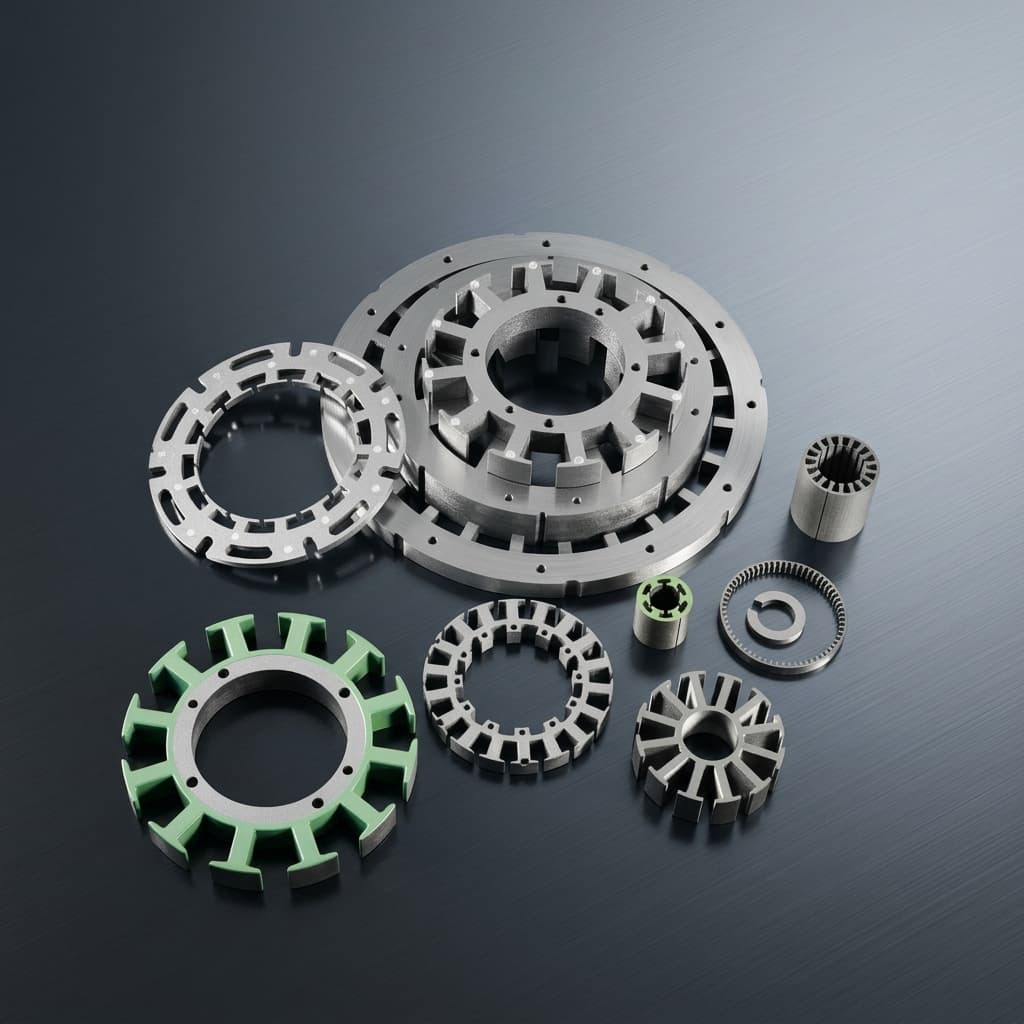
Thermal Management in Axial Flux Motors: Direct Oil Cooling and Stator Core Design
Engineering guide to axial flux motor thermal management, direct oil cooling, SMC stator design, validation risks, supplier evidence, and RFQ checks for buyers.
Executive Summary
- The Thermal Bottleneck: Axial Flux Permanent Magnet (AFPM) motors offer high torque density, but their compact "sandwich" structure creates severe thermal bottlenecks. As programs target multi-kW/kg continuous power, passive cooling and simple water jackets often become the limiting design assumption.
- The Shift to Direct Oil Cooling: High-performance applications in EVs, eVTOLs, and motorsport increasingly evaluate direct oil cooling (end-winding spray, air-gap cooling, or in-slot cooling) to extract heat closer to the stator copper and core.
- Stator Core Vulnerabilities: Exposing the stator core to hot, high-velocity dielectric oils introduces mechanical and chemical risks. Procurement teams must rigorously evaluate stator suppliers for epoxy chemical compatibility, thermal shock resistance, and long-term dimensional stability.
- Material Selection (SMC vs. Laminations): Soft Magnetic Composites (SMC) can reduce lamination-stack failure modes and support 3D geometric freedom, but binder, epoxy, slot liner, and oil compatibility still require program-specific validation.
Scope and date note (updated July 22, 2026): This guide is written for global engineering, procurement, and supplier-quality teams evaluating AFPM stator sourcing for EV traction, eVTOL propulsion, robotics, motorsport, and compact generator programs. It is not a substitute for CFD, electromagnetic loss mapping, dyno validation, or the oil supplier's compatibility data for a named fluid formulation.
As the axial flux motor transitions from a niche prototype to a mass-produced component in global automotive and industrial platforms, thermal management has emerged as the primary limiting factor for continuous power output. The physical architecture of an axial flux motor—often featuring a central stator flanked by dual rotors (axial gap topology)—provides exceptional torque density but leaves very little surface area for heat dissipation.
For procurement managers, supply chain directors, and lead motor engineers, evaluating the cooling strategy is not just a thermal engineering exercise; it fundamentally dictates the Bill of Materials (BOM), the required supplier capabilities, and the long-term reliability of the AFPM SMC stator or laminated stator core. Material data, insulation systems, and process controls should be reviewed alongside SMC material constraints, not after the RFQ is priced.
This guide provides a comprehensive framework for understanding axial flux motor cooling technologies, the transition toward direct oil cooling, and how these thermal strategies dictate the sourcing criteria for stator cores and potting materials.
1. The Physics of Heat in Axial Flux Topologies
In a conventional radial flux motor, the stator is mounted directly to the outer casing, providing a large, uninterrupted path for conductive heat transfer to an external water jacket.
Axial flux motors operate under entirely different geometric constraints. In a typical yokeless and segmented armature (YASA) topology, the stator sits in the middle of the machine, suspended between two spinning rotors. This creates a challenging thermal environment:
- Copper Losses (I²R): Concentrated windings in AFMs generate intense localized heat. Because the stator is internal, heat cannot easily conduct to the outer housing.
- Iron Losses (Core Losses): High-frequency magnetic flux (often exceeding 400 Hz to 1000 Hz in modern EV platforms) induces eddy currents and hysteresis losses within the stator core material itself.
- Restricted Conduction Paths: Heat must travel from the copper windings, through the slot insulation, into the stator core (SMC or laminated steel), through a potting compound, and finally into a cooling medium or structural mount. Every interface adds thermal resistance.
Without aggressive cooling, these thermal constraints force engineers to derate the motor, severely limiting its continuous power—the most critical metric for long-haul EVs and continuous-duty robotics.
2. Evolution of Axial Flux Cooling Strategies
To overcome the "sandwich" thermal bottleneck, the industry has evolved through several generations of cooling strategies. Each step increases continuous power density but adds supply chain complexity and manufacturing cost.
Passive Air Cooling
Suitable only for low-power or intermittent-duty applications (e.g., e-bikes, low-speed robotics). Heat relies entirely on natural convection and radiation.
- Continuous Power Limit: Very low.
- Procurement Impact: Standard stator materials; no specialized sealing or potting required.
Indirect Water/Glycol Cooling (Water Jacket)
The standard for first-generation automotive AFMs. A water-glycol mixture flows through a cooling jacket surrounding the stator housing. Heat must conduct from the windings, through the stator core, and into the housing.
- Continuous Power Limit: Moderate.
- Procurement Impact: Requires high thermal conductivity potting compounds to bridge the gap between the stator core and the housing. Core dimensional stability is critical to maintain contact with the heat sink.
Direct Oil Cooling (Air-Gap and In-Slot)
A common direction for high-performance traction prototypes and selected production programs reviewed in 2026. Dielectric oil (often Automatic Transmission Fluid - ATF or purpose-formulated EV thermal fluid) is sprayed directly onto the end-windings, or forced through the air gap and stator slots. This removes heat closer to the source.
- Continuous Power Limit: Highest among mainstream options when parasitic pumping loss, windage, sealing, and cleanliness are controlled.
- Procurement Impact: High. Stator slot insulation, epoxy potting, and the core material itself must be chemically compatible with hot oil (up to 140°C).
3. Comparison of Axial Flux Motor Cooling Technologies
The table below provides a decision matrix for engineering and procurement teams balancing performance requirements against manufacturing complexity and cost.
| Cooling Technology | Primary Heat Extraction Mechanism | Peak vs. Cont. Power Gap | Stator Core Complexity | Sealing / Housing Cost | Target Application Profile |
|---|---|---|---|---|---|
| Passive Air Cooling | Natural convection from outer casing | Massive (Peak 3x Cont.) | Low - Standard slot fill | Low - Open or semi-open | E-bikes, low-duty robotics |
| Forced Air Cooling | Fan-driven air over fins or through gap | Large | Low - Conformal coating needed | Low - Dust/debris filtration | Industrial servos, drones |
| Water/Glycol Jacket | Conduction through housing to fluid | Moderate (Peak 1.5x Cont.) | Medium - Requires high-k potting | Medium - Separate liquid loop | Mainstream passenger EVs |
| Direct Oil (End-Winding Spray) | Convection directly from copper ends | Small | High - Chemical compatibility | High - Shaft seals, scavenge pump | Performance EVs, hypercars |
| Direct Oil (In-Slot / Air Gap) | Convection from copper and core face | Minimal (Near 1:1) | Extreme - Oil channels in core | Extreme - Complex fluid dynamics | eVTOLs, motorsport |
| Phase Change / Cryogenic | Latent heat of vaporization | Zero derating | Bespoke - Vacuum insulation | Bespoke - Extreme pressure | Aerospace, defense |
4. How Direct Oil Cooling Impacts Stator Core Engineering
When a motor design transitions to direct oil cooling, the stator core is no longer just a magnetic component; it becomes a structural element immersed in a hostile chemical and thermal environment.
The Problem with Laminated Steel in Oil
Traditional electrical steel laminations are coated with a thin organic or inorganic insulating varnish (e.g., C5 coating) to prevent eddy currents from bridging the sheets. When exposed to hot, high-velocity dielectric oil, several failure modes emerge:
- Delamination: Capillary action can draw hot oil between the laminations. Over thousands of thermal cycles, this can degrade the bonding varnish, leading to delamination and catastrophic failure.
- Orthotropic Expansion: Laminated stacks expand differently in the radial/circumferential directions versus the axial direction. In an oil-cooled environment with rapid temperature fluctuations, this uneven expansion stresses the potting compound and slot liners.
The Soft Magnetic Composite (SMC) Advantage
SMC materials consist of iron powder particles, each individually coated with a microscopic inorganic insulation layer, compacted under immense pressure. This structure offers distinct thermal and mechanical advantages for direct oil cooling:
- Reduced Lamination-Path Risk: SMC removes the bonded sheet stack and inter-laminar capillary paths that can complicate oil-immersed laminated cores. The final assembly still needs immersion aging for the chosen oil, temperature, and duty cycle.
- More Isotropic Core Behavior: SMC is typically more directionally uniform than laminated electrical steel, which can reduce shear stress on potting and slot insulation during rapid thermal cycling. Confirm the actual coefficient of thermal expansion and resin system from the supplier's data.
- Net-Shape Cooling Geometry: Because SMC is formed via powder compaction rather than stamping, engineers can evaluate 3D features, local reliefs, and potential oil paths around the stator teeth. For manufacturable axial flux motor core designs, channel geometry still has to clear compaction, ejection, pressure-drop, debris, and inspection limits.
5. Visualizing the Thermal Path
The following diagram illustrates the difference in heat flux paths between traditional jacket cooling and advanced direct oil cooling in an axial flux stator.
6. Sourcing & Engineering Checklist: Vetting Stators for Oil Cooling
When transitioning an AFM design from passive/jacket cooling to direct oil cooling, procurement teams and supplier quality engineers must audit stator manufacturers on entirely new dimensions. Use the following checklist during your RFQ and supplier validation process:
- Fluid Compatibility Verification: Has the supplier provided independent lab data confirming that their core binders, slot liners (e.g., Nomex, PEEK), and potting epoxies do not degrade after 1,000+ hours immersed in the specific dielectric oil (e.g., DEXRON-VI, Shell E-Fluids) at operating temperatures?
- Epoxy Thermal Conductivity: What is the verified thermal conductivity ($W/m\cdot K$) of the potting compound used in the stator assembly? (Standard epoxy is ~0.2 $W/m\cdot K$; highly filled performance epoxies should exceed 1.5 $W/m\cdot K$).
- Thermal Shock Resistance: Can the potted stator assembly withstand sudden temperature delta testing (e.g., -40°C to +150°C) without micro-cracking in the epoxy, which would allow oil ingress and subsequent short-circuits?
- Core Delamination Risk: If sourcing laminated steel, what is the supplier's PPAP control plan for preventing oil ingress between laminations over a 10-year service life?
- Net-Shape Channel Tolerances (SMC Only): If utilizing SMC with internal cooling channels, what are the manufacturing tolerances for channel diameter and surface roughness? (Rough surfaces can cause localized pressure drops and flow stagnation).
- Dielectric Withstand Testing (Hi-Pot): Is the stator assembly tested for dielectric breakdown after long-term oil saturation tests, ensuring the insulating properties of the core and liners remain intact when wet?
- Cleanliness and Debris: Does the supplier have cleanroom or controlled-environment capabilities to ensure no microscopic metal shards or un-cured epoxy flakes enter the stator, which could later contaminate the central oil cooling loop?
For release planning, pair this checklist with the supplier's manufacturing and quality evidence: sample IDs, inspection records, varnish or coating controls, potting cure logs, oil-aging conditions, and post-aging electrical test results should all reference the same stator revision.
7. FAQ: Thermal Management in Axial Flux Motors
Q: Why can't we just use larger cooling fins on the exterior housing?
A: Axial flux motors have a small outer diameter relative to their active magnetic area. The surface area available for fins is fundamentally limited. Furthermore, heat generated in the central stator must cross multiple high-resistance interfaces (copper $\rightarrow$ insulation $\rightarrow$ core $\rightarrow$ air gap $\rightarrow$ housing) before reaching those fins. Internal heat builds up faster than the fins can dissipate it.
Q: Does direct oil cooling reduce the efficiency of the motor?
A: Electromagnetically, keeping the copper cooler increases efficiency by preventing the rise in electrical resistance associated with hot copper. However, mechanically, pumping oil and churning it within the air gap introduces viscous drag (windage losses). The system-level efficiency depends on balancing these thermal gains against the parasitic pumping losses.
Q: Are Soft Magnetic Composites (SMC) structurally strong enough to withstand high-pressure oil flow?
A: Yes. While raw SMC is more brittle than solid steel, the cured stator assembly is typically vacuum-potted in a high-strength structural epoxy. The integrated matrix of SMC, copper, and epoxy creates an extremely rigid monolithic block capable of withstanding the fluid pressures and mechanical vibrations of direct oil cooling.
Q: Can we use standard Automatic Transmission Fluid (ATF) for cooling?
A: ATF is commonly used due to its availability and known dielectric properties. However, modern OEMs are increasingly shifting towards purpose-formulated EV thermal fluids that offer lower viscosity (reducing drag) and higher specific heat capacity, specifically engineered not to degrade stator varnishes and epoxies.
8. Sourcing the Right Core for Your Thermal Strategy
Thermal management is no longer an afterthought in axial flux motor design; it is the primary determinant of continuous power density, system weight, and long-term reliability. Moving to direct oil cooling requires a fundamental shift in how you evaluate and source stator cores. Standard stamped laminations introduce severe risks in oil-immersed environments, from uneven thermal expansion to varnish degradation.
Soft Magnetic Composites (SMC) can provide a robust and geometrically flexible alternative when the binder, insulation, and potting stack pass oil-aging validation. They also remove the inter-laminar delamination path that stamped stacks must control.
Ready to evaluate SMC for your next high-performance motor program?
Before finalizing your BOM, ensure your stator core can survive your thermal strategy. Contact our engineering team for a comprehensive DFM review, thermal modeling support, or to request SMC material samples for fluid compatibility testing.
Sources & References
- Energies (2022): Advances in Thermal Management Technologies of Electrical Machines. https://doi.org/10.3390/en15093249
- IEEE / Semantic Scholar record: Direct Liquid Cooling Method Verified With an Axial-Flux Permanent-Magnet Traction Machine Prototype. https://www.semanticscholar.org/paper/Direct-Liquid-Cooling-Method-Verified-With-an-Lindh-Petrov/8826ade648dba15bc08cd6ad24aa63fd56101007
- IEEE / Semantic Scholar record: Direct Oil Cooling of End-Windings in Torus-Type Axial-Flux Permanent-Magnet Machines. https://www.semanticscholar.org/paper/Direct-Oil-Cooling-of-End-Windings-in-Torus-Type-Marcolini-Donato/f0af38010480bd437cc193f5c657b3d4f2b60e37
- IFP Energies Nouvelles / HAL: Experimental Study of Systems and Oils for Direct Cooling of Electric Motors. https://ifp.hal.science/hal-03658510/document
- Metals (2024): Application of Soft Magnetic Composite in XEV Motor Core. https://doi.org/10.3390/met14101163
Article-to-RFQ Workflow
Turn this guide into an evidence-ready RFQ.
Use the article context as the starting point, then align CAD status, magnetic targets, validation scope, and release records before asking suppliers to quote.
Capture the decision
Identify the topology, product family, operating point, and current gate before the article takeaway becomes a supplier question.
Attach buyer inputs
Prepare drawing status, magnetic targets, quantity plan, destination, and open risks in the RFQ worksheet.
Request evidence
Ask for DFM notes, first article inspection, magnetic validation, traceability, and packaging release files before price comparison.
Author

Categories
More Posts
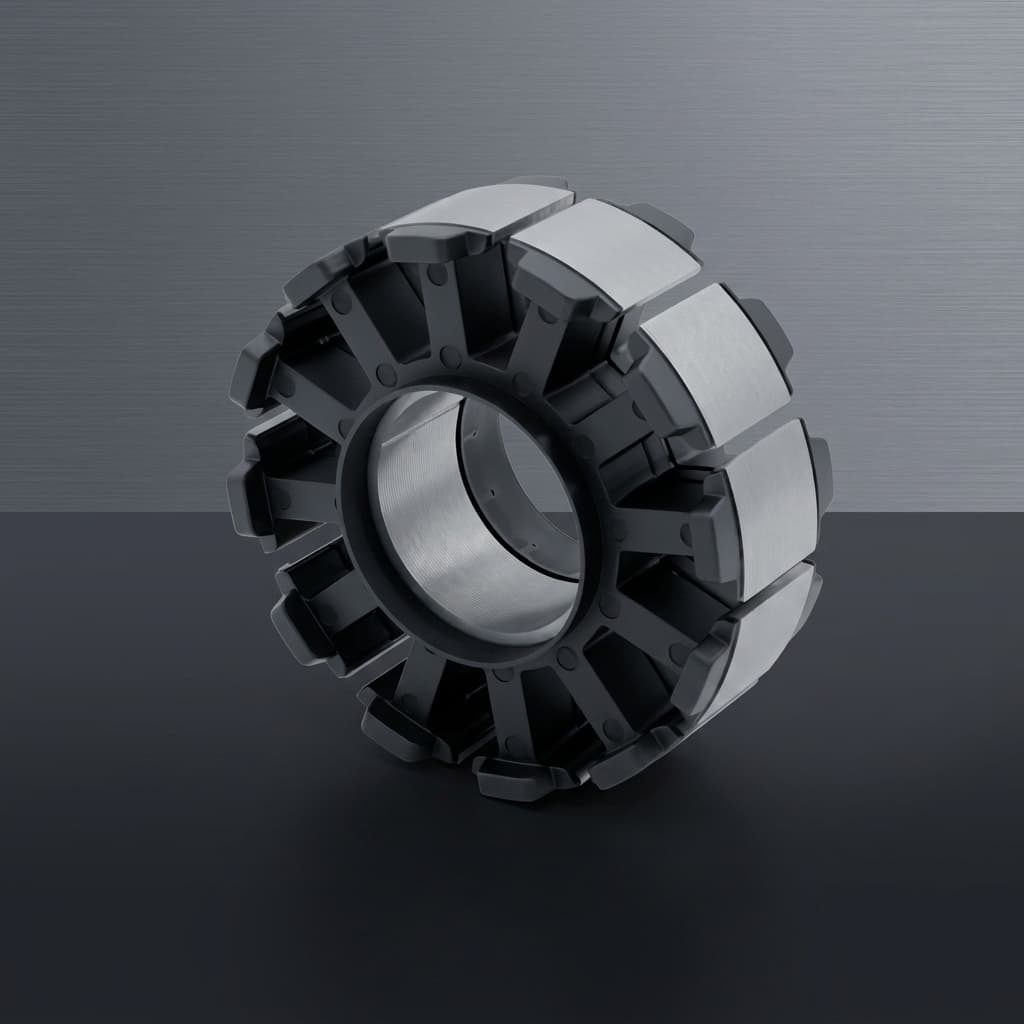
SMC Stator Prototyping: A DFM Guide for Axial Flux Motor Engineers
A precise Design for Manufacturability (DFM) guide for motor design teams transitioning axial flux stator prototypes into Soft Magnetic Composite (SMC) mass production.
Magnetic Loss Testing in High-Frequency Axial Flux Motors
Understanding iron losses (eddy currents and hysteresis) at high frequencies and why Soft Magnetic Composites (SMC) outperform electrical steel in compact AFPM designs.
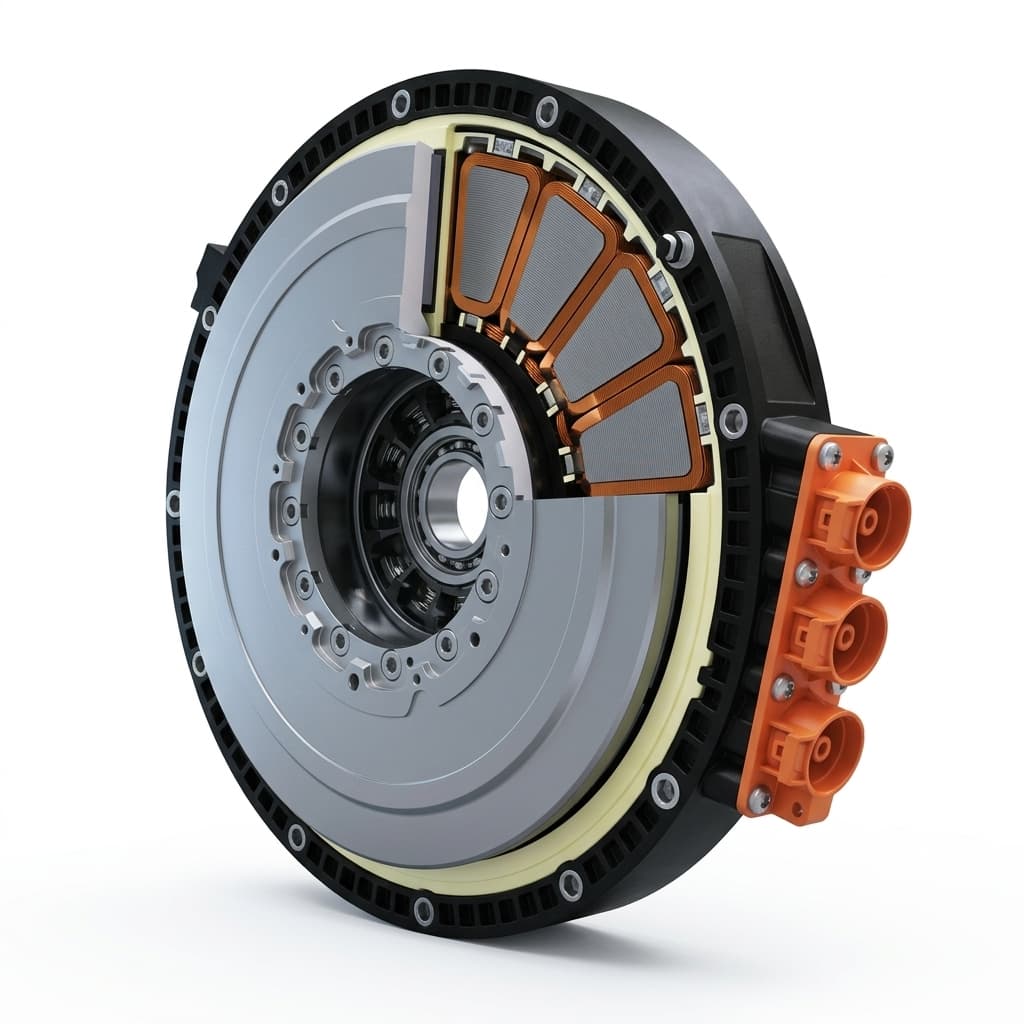
Foxconn-Magnax and PanGood: Axial Flux Motor Mass Production Scales Up
Foxconn-Magnax and PanGood show axial flux motor mass production moving into Asian foundries. Compare capacity, sourcing risks, RFQ actions, and evidence gaps.