
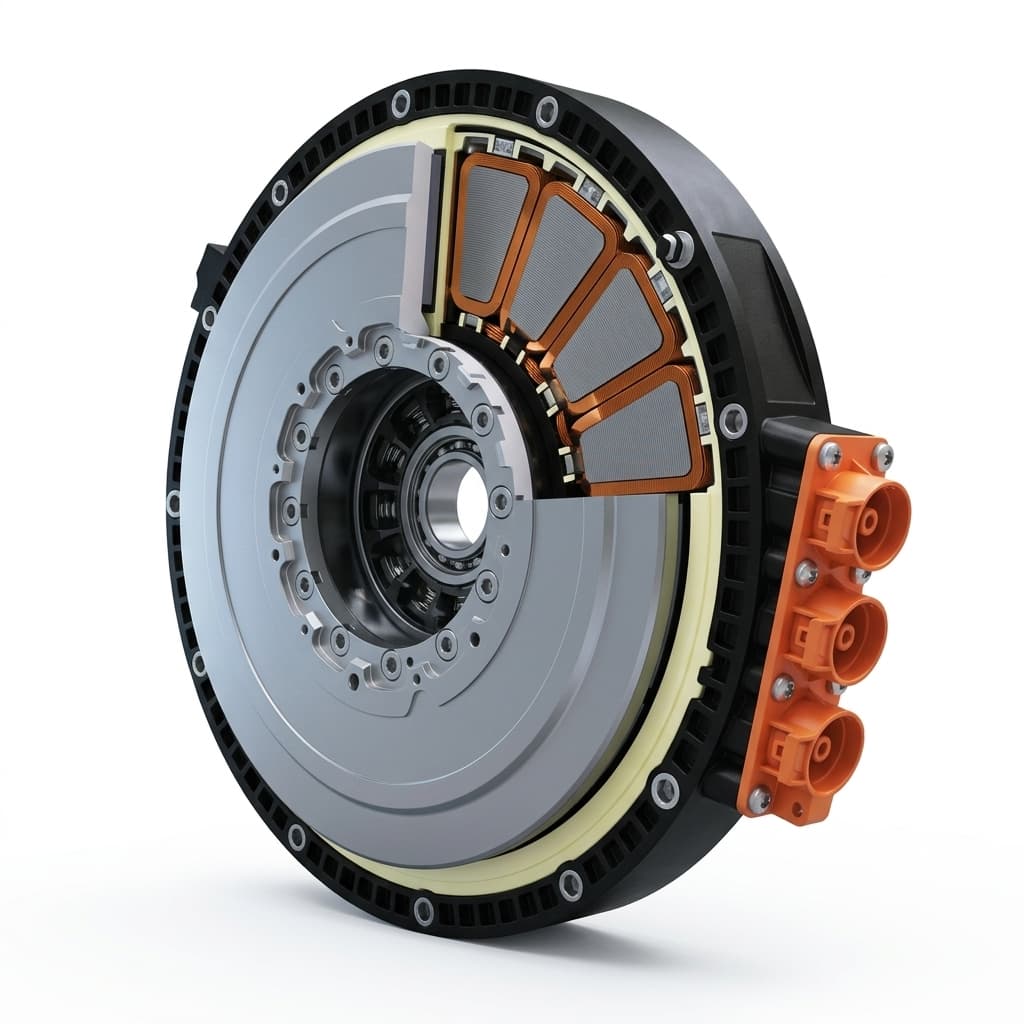
Mercedes-Benz Launches Large-Scale Axial Flux Motor Production: What It Means for the Supply Chain
Mercedes-Benz axial flux motor production in Berlin changes AFPM sourcing. See supplier tolerances, SMC stator risks, evidence gaps, and RFQ actions.
Decision-Level Conclusion: In June 2026, Mercedes-Benz officially launched large-scale, automated production of Axial Flux Permanent Magnet (AFPM) motors at its Berlin-Marienfelde plant. Marking a transition from low-volume prototypes to an industrial reality, this achievement involves 98 highly automated process steps (35 of which are new worldwide) and validates that AFMs can be mass-produced with ultra-tight tolerances under intense magnetic forces (up to 9 kN). For the motor supply chain—particularly stator and rectangular copper wire manufacturers—this establishes a new baseline for quality, dimensional accuracy, and automated assembly compatibility.
Scope and date note (reviewed July 22, 2026): This analysis covers publicly reported Mercedes-Benz and YASA production news and its global AFPM sourcing implications. It is written for OEM procurement, Tier 1 sourcing, supplier quality, and motor engineering teams; it does not claim access to Mercedes-Benz supplier specifications, yield rates, or cost data. Use it as an RFQ planning lens, then validate project-specific tolerances through magnetic loss validation, manufacturing quality evidence, and supplier PPAP or FAI data.
Teams already comparing AFPM SMC stators, SMC stator segments, and lamination or winding service routes should treat this launch as a signal that component-level repeatability is now a procurement constraint, not just a motor-design preference.
What Changed in June 2026
Until recently, the production of axial flux motors—such as those pioneered by YASA (acquired by Mercedes-Benz in 2021)—has been largely restricted to small batches or manual/semi-automated assembly lines. The geometry of a "yokeless" stator positioned between two massive magnetic rotor disks makes assembly incredibly difficult due to the powerful axial magnetic forces.
In June 2026, Mercedes-Benz fundamentally altered this landscape by operationalizing a 30,000-square-meter facility in Berlin-Marienfelde dedicated to industrial-scale AFM production.
Key Shifts in Manufacturing
| Dimension | Prototype / Low-Volume AFM | Mercedes-Benz Mass Production (June 2026) | Impact on Supply Chain |
|---|---|---|---|
| Assembly Method | Heavy manual labor, custom fixtures | Highly automated robotics, AI vision control | Requires suppliers to meet robotic handling tolerances |
| Process Steps | Ad-hoc, highly variable | 98 standardized manufacturing steps | Enforces strict DFM (Design for Manufacturing) |
| Joining Technology | Traditional welding / bonding | High-precision laser welding (copper & plastic) | Need for thermally stable, high-consistency materials |
| "Wedding" Phase Tolerance | > 0.5 mm variance allowed | < 0.1 mm precision under high magnetic forces | Stator core dimensions (e.g. SMC thickness) must be exact |
| Quality Assurance (QA) | End-of-line human inspection | AI-powered, inline visual quality control | Component defects trigger immediate automated rejection |
| Facility Scale | Micro-factories / job shops | 30,000 sqm dedicated production area | High capital expenditure barrier for new entrants |
| Stator Material | Machined laminations typical | SMC highly favored for 3D topology | Procurement shift towards SMC powder metallurgy |
| Supply Chain Role | Vertically integrated / custom | Reliance on scalable Tier 2/3 specialists | Forces Tier 2 suppliers to upgrade inline metrology |
Why It Matters: Overcoming the AFM Manufacturing Bottleneck
The most critical breakthrough in this new production line is the "Wedding" phase—the stage where the stator is placed between the two rotor disks. Due to the intense magnetic forces involved, the stators and rotors must be aligned perfectly to maintain uniform air gaps on both sides.
By achieving this using automated robotics and AI-powered vision controls that enforce tolerances below 0.1 mm, Mercedes-Benz has publicly demonstrated that the complexity of AFMs can be managed in volume production. This milestone matters because performance vehicles starting with the AMG.EA platform can use ultra-compact, high-torque motors at scale, while suppliers of the axial flux motor core now need evidence that their geometry, magnetic loss, insulation, and traceability controls can survive automated handling.
Impact on Buyers, Procurement Teams, and Engineers
The industrialization of the AFM introduces severe new demands on Tier 2 and Tier 3 suppliers, particularly those providing the stator core materials (whether Soft Magnetic Composites or laminated electrical steel).
For Procurement and Supply Chain Teams
Automated robotic assembly is entirely unforgiving. If a batch of SMC stators exhibits a 0.2 mm variance in thickness, human assemblers might manually shim or adjust it, but an automated line running 98 synchronized steps will instantly reject it. Procurement teams must immediately audit their suppliers' post-machining capabilities, dimensional consistency metrics, and capacity for 100% inline quality checks. Start from the SMC versus lamination sourcing tradeoff, then convert the decision into RFQ template inputs before asking for production quotes.
For Motor Design Engineers
The anxiety surrounding the "manufacturability" of axial flux topology has been reduced, but not eliminated. Engineers designing drivetrains for performance EVs, eVTOLs, or robotics can specify AFPMs with more confidence that large-scale manufacturing is physically possible. However, the design must incorporate strict DFM principles compatible with automated handling, such as proper datum surfaces, clamping points, coating controls, and inspection references. Early builds should still pass through axial flux stator prototyping before design teams treat a motor layout as production-ready.
Hard Specifications & Buyer Thresholds
With Mercedes-Benz filing over 30 new patents for this 98-step process, the technical capabilities of this line set new procurement baselines:
| Metric / Specification | Observed Value (June 2026) | Procurement & Design Implication |
|---|---|---|
| Max Power Density (Prototype) | 59 kW/kg (announced Oct 2025) | Outperforms radial flux by 3x; ideal for high-performance segment. |
| Wedding Phase Magnetic Force | Up to 9 kN | Assembly tooling must withstand extreme localized stresses. |
| Stator Winding | Rectangular Copper Wire | Increases fill factor; requires advanced wire bending & winding suppliers. |
| Coil Stack Connection | Precision Laser Welding | Eliminates thermal damage risk to adjacent components. |
| New Process Steps | 35 globally novel steps | Suppliers must co-develop automation rather than relying on standard COTS tools. |
These thresholds are procurement implications drawn from public reporting, not Mercedes-Benz supplier requirements. For buyer teams, the practical next step is to ask whether suppliers can document stable geometry and magnetic behavior across sample, pilot, and repeat-order phases.
Risks, Evidence Gaps, and Boundaries
While the Mercedes-Benz milestone is monumental, it is crucial not to over-extrapolate the immediate impact:
- Premium Segment Focus: This production line supports the high-end AMG.EA platform (like the AMG GT 4-Door Coupe). AFMs remain a premium technology; they will not displace radial flux motors in budget-conscious, standard passenger EVs in the short term.
- Capital Expenditure Limits: The level of investment required for a 30,000 sqm facility with AI vision and laser welding is immense. Small-to-medium motor OEMs without deep pockets will struggle to replicate this automated setup in the next 2-3 years.
- Supplier Shakeout Risk: Suppliers lacking high-precision CNC equipment (to face off SMC stator cores to exact dimensions) will be phased out of the AFM supply chain as automation becomes the standard.
- Evidence Gaps regarding Yield Rates: While Mercedes-Benz has proven the automated process (handling 9 kN of magnetic force), official yield rates (scrap rates) and per-unit costs have not been publicly disclosed. Procurement teams modeling AFM costs should build in aggressive scrap buffers for the first 12-18 months of production.
Who Should Act Now (Action Checklist)
For companies active in the electric motor supply chain:
- Stator Core Suppliers: Verify internal capabilities for machining stator faces to tolerances < 0.05 mm. If relying on raw compaction without post-processing, you will likely fail automated integration. Align evidence expectations with manufacturing quality controls.
- Procurement Directors: Initiate a supplier audit specifically targeting dimensional consistency over batches of 10,000+ units. Manual inspection is no longer sufficient; request data from inline automated metrology.
- System Integrators: Revisit any previously shelved AFM projects. The demonstration of large-scale automated assembly by an OEM validates that volume-related cost reductions are imminent.
- Teams issuing RFQs: Bring tolerance stack, magnetic loss targets, winding interface, annual volume, and validation gate assumptions into one contact/RFQ review instead of pricing each part in isolation.
FAQ
Q: Did Mercedes-Benz develop the entire axial flux motor from scratch? A: The core technology heavily leverages the yokeless and segmented armature (YASA) design developed by the UK-based company YASA, which Mercedes-Benz acquired in 2021. However, the 98-step automated production process was industrialized in-house.
Q: Can this automated process use either laminated steel or SMC stators? A: Both materials can theoretically be used in AFMs. However, SMC (Soft Magnetic Composites) is highly favored for the yokeless segments due to its 3D magnetic isotropy and reduced manufacturing complexity compared to folding laminations.
Q: Which vehicles will first receive these mass-produced motors? A: The motors produced at the Berlin-Marienfelde facility are slated for the upcoming all-electric Mercedes-AMG GT 4-Door Coupe and other models built on the performance-oriented AMG.EA platform.
Sources
- Mercedes-Benz begins axial flux motor production in Berlin (Electrive, June 10, 2026)
- Mercedes-Benz starts axial flux motor production in Berlin (Automotive World, June 9, 2026)
- Mercedes-Benz Starts Axial Flux Motor Production in Berlin (The EV Report, June 11, 2026)
- Large-scale production of electric axial flux motor (Mercedes-Benz Group, June 9, 2026)
- YASA 59 kW/kg axial flux motor benchmark (YASA, Oct. 22, 2025)
The sources above confirm public facility, process, platform, and prototype-performance claims. They do not disclose Mercedes-Benz yield rates, per-unit costs, supplier allocation, or released supplier drawings; buyer thresholds in this article are Axialfluxcore procurement implications.
Article-to-RFQ Workflow
Turn this guide into an evidence-ready RFQ.
Use the article context as the starting point, then align CAD status, magnetic targets, validation scope, and release records before asking suppliers to quote.
Capture the decision
Identify the topology, product family, operating point, and current gate before the article takeaway becomes a supplier question.
Attach buyer inputs
Prepare drawing status, magnetic targets, quantity plan, destination, and open risks in the RFQ worksheet.
Request evidence
Ask for DFM notes, first article inspection, magnetic validation, traceability, and packaging release files before price comparison.
Author

Categories
More Posts
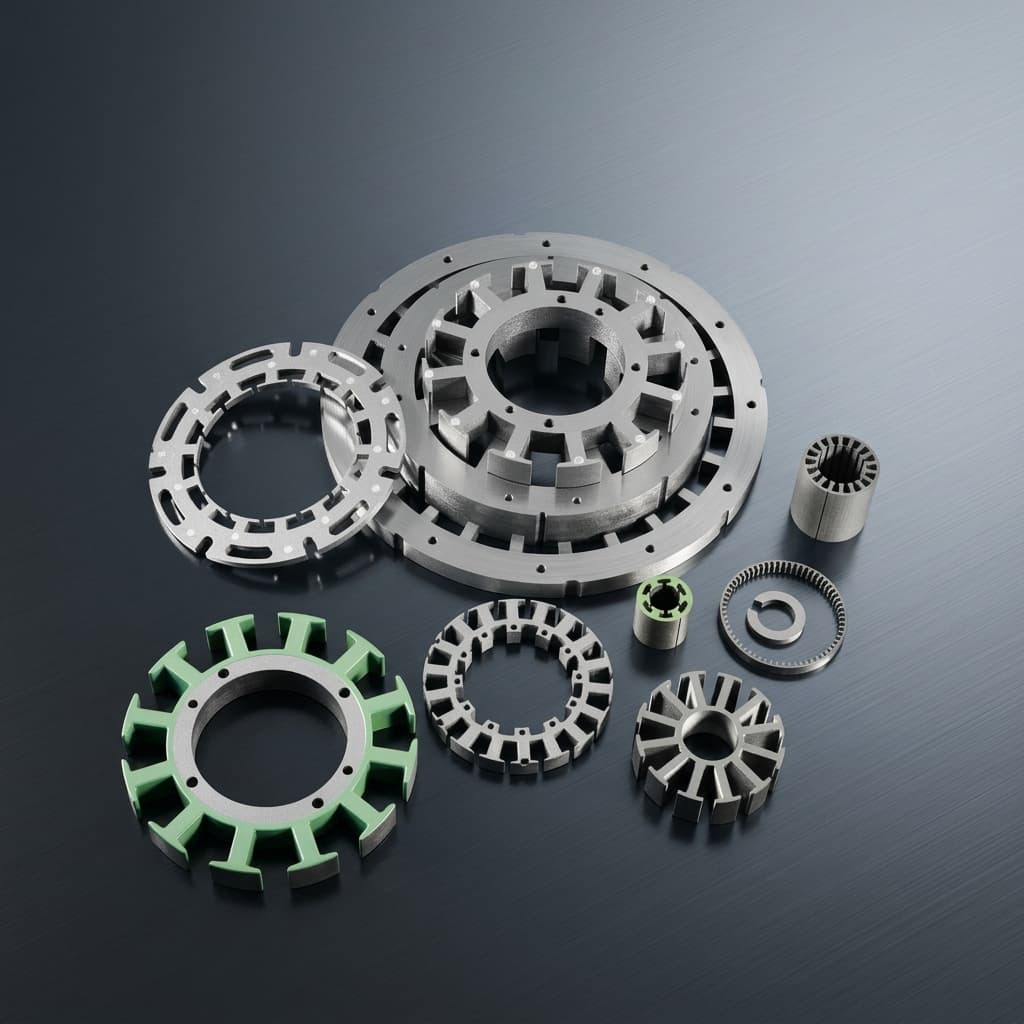
Axial Flux Motor Topologies (YASA, AFIR, TORUS): A Core Sourcing & Procurement Guide
Compare YASA, AFIR, and TORUS axial flux motor topologies for stator core sourcing, SMC vs laminated steel choices, RFQ risk control, and DFM review.
Thermal Management in Axial Flux Motors: Direct Oil Cooling and Stator Core Design
Engineering guide to axial flux motor thermal management, direct oil cooling, SMC stator design, validation risks, supplier evidence, and RFQ checks for buyers.
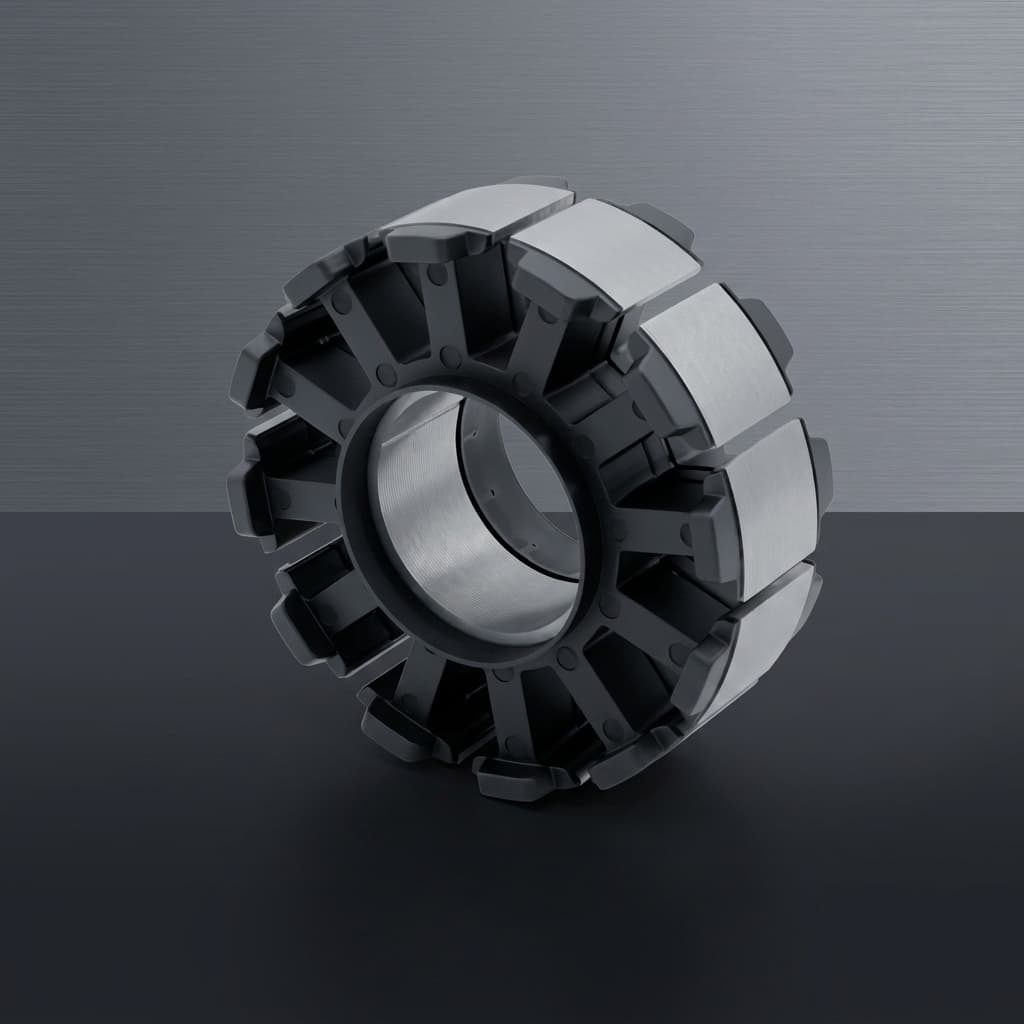
SMC Stator Prototyping: A DFM Guide for Axial Flux Motor Engineers
A precise Design for Manufacturability (DFM) guide for motor design teams transitioning axial flux stator prototypes into Soft Magnetic Composite (SMC) mass production.