
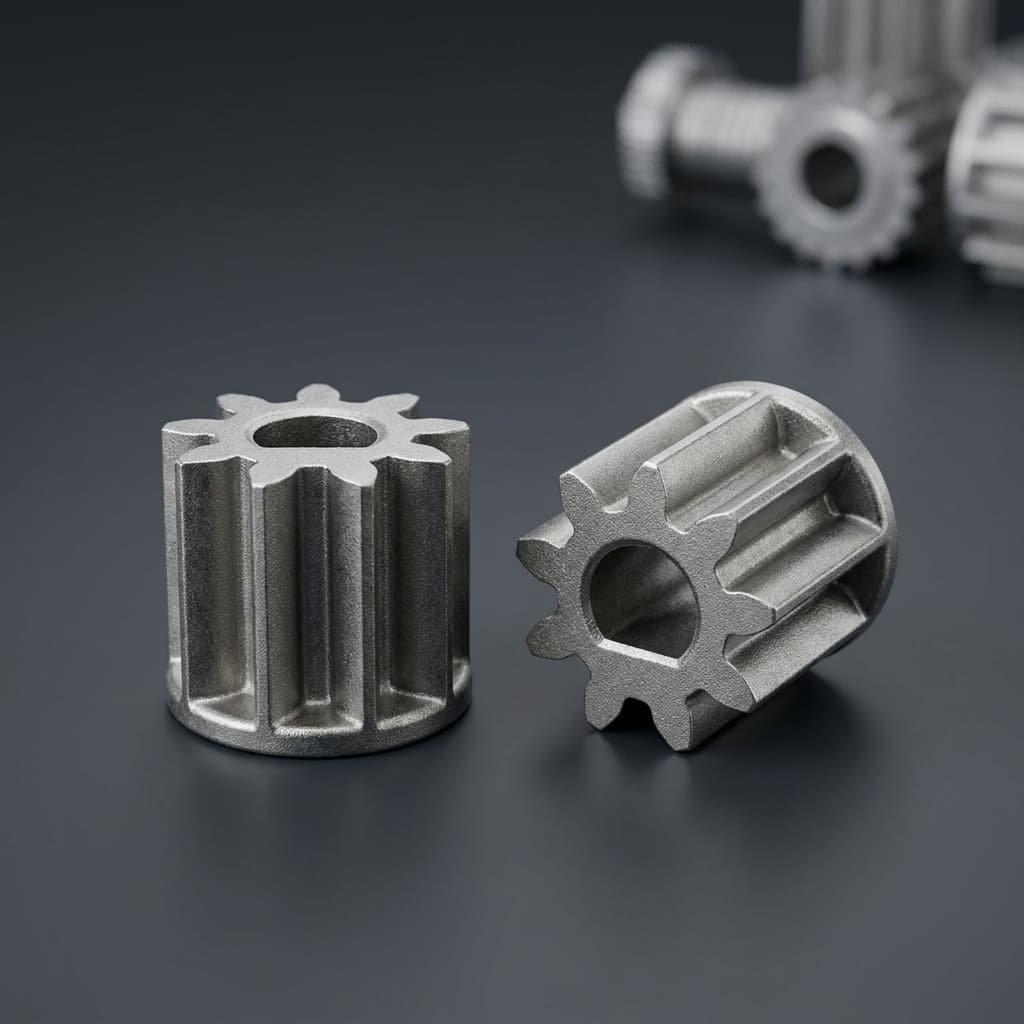
Axial Flux Motor Applications: Why eVTOL, Robotics, and EVs Are Shifting to AFPM
Discover why electric aviation, humanoid robotics, and performance EVs are rapidly adopting Axial Flux Permanent Magnet (AFPM) motors and how SMC stators enable these high-torque designs.
Executive Summary
- Primary Driver: Axial Flux Permanent Magnet (AFPM) motors deliver 30-50% higher torque density than radial flux motors, making them essential for eVTOL, humanoid robotics, and drone propulsion.
- Manufacturing Bottleneck: Laminated steel stators become fragile, costly, and thermally inefficient at the high frequencies (>800 Hz) required by these applications.
- The SMC Solution: Soft Magnetic Composites (SMC) allow for 3D net-shape compaction of stator cores, effectively eliminating high-frequency eddy currents through particle-level insulation.
The electrification of high-performance mobility and advanced robotics has exposed a hard physical limit: traditional radial flux motors are simply too heavy and bulky for the next generation of applications. When engineering teams hit a wall trying to squeeze more torque out of a constrained cylindrical package, the conversation inevitably pivots to Axial Flux Permanent Magnet (AFPM) motors.
Unlike radial motors where magnetic flux travels radially across the air gap, axial flux machines pass the flux parallel to the axis of rotation. This seemingly simple geometric shift yields a profound advantage: a significantly larger active magnetic area relative to the motor's total volume.
Below is an analysis of the three core industries driving the mass adoption of AFPM topologies, the exact engineering parameters they require, and why Soft Magnetic Composite (SMC) stators are the linchpin making this transition commercially viable for OEMs.
1. Electric Aviation (eVTOL & Drones)
The electric Vertical Takeoff and Landing (eVTOL) sector operates under the strictest weight constraints in the engineering world. Every extra kilogram of motor mass directly cannibalizes payload capacity and flight range.
The Power-to-Weight Imperative
eVTOL propulsion requires immense torque at low to medium RPMs (typically 2,000 to 5,000 RPM) to drive large propellers directly without heavy reduction gearboxes, especially during hover phases. Radial motors achieve high torque by increasing their diameter or length, adding unacceptable mass. Axial flux motors, characterized by their "pancake" or "disk" profile, inherently excel at high torque density, regularly achieving >10 kW/kg peak power densities compared to the 3-5 kW/kg of standard radial machines.
Why SMC is Critical Here
Aviation applications often demand high pole counts (often 20+ poles) and high operating frequencies (frequently exceeding 1,000 Hz) to maximize power density.
| Parameter | 0.20mm Silicon Steel | Soft Magnetic Composite (SMC) |
|---|---|---|
| Eddy Current Losses at >1,000 Hz | Extremely High (scales exponentially $f^2$) | Very Low (insulated particles suppress currents) |
| 3D Flux Capability | Poor (flux constrained to 2D plane) | Excellent (isotropic magnetic properties) |
| Stator Assembly | Complex mandrel winding or wasteful stamping | Net-shape powder compaction |
Soft Magnetic Composites (SMC) solve high-frequency eddy current issues perfectly. SMC powder metallurgy allows for the net-shape compaction of complex, 3D stator teeth. The inorganic insulation coating on each individual iron powder particle (typically 50-100 μm in diameter) drastically suppresses eddy currents, maintaining high efficiency even at extreme switching frequencies.
2. Humanoid Robotics and Exoskeletons
If eVTOLs are constrained by weight, humanoid robotics are constrained by volume and dynamic response.
The Joint Actuation Challenge
Actuators in robotic hips, knees, and shoulders must fit inside a human-like form factor (often <100mm in diameter) while delivering explosive, instantaneous torque to maintain balance and execute dynamic movements. These joints operate at very low speeds (50 to 300 RPM) but require massive holding torque.
AFPM motors paired with strain-wave (harmonic) gearing have emerged as the gold standard for robotic joints. The ultra-thin axial profile of the motor allows it to mount directly to the flat, disk-like shape of harmonic drives, creating a compact "pancake actuator."
The Yokeless Advantage
Many robotic designs employ a Yokeless and Segmented Armature (YASA) axial flux topology. By eliminating the heavy stator yoke, the motor sheds up to 50% of its stator mass. However, manufacturing individual, yokeless stator teeth from laminated steel is mechanically fragile and difficult to wind.
SMC shines in this application:
- High Copper Fill Factor: Individual SMC teeth can be bobbin-wound before assembly, pushing copper fill factors above 60-70%.
- Structural Integrity: Compacted SMC teeth offer sufficient structural rigidity to withstand the high shear forces inside a dynamic robotic joint.
3. High-Performance EVs and In-Wheel Traction
While standard passenger EVs still largely rely on radial flux motors for cost reasons, the supercar and high-performance EV segments are aggressively transitioning to axial flux architectures.
Packaging and Unsprung Mass
For performance vehicles, AFPMs offer an unparalleled torque-to-volume ratio. Their compact axial length (often under 100mm) allows them to be sandwiched between the engine and transmission in hybrid setups, or mounted directly on the axles without intruding into the cabin space.
For in-wheel motor applications, minimizing unsprung mass is critical for vehicle handling. A twin-rotor single-stator (TRSS) axial flux motor can deliver the required 1,000+ Nm of traction torque at a fraction of the weight of a comparable radial motor.
Scaling AFPM Production with SMC: A Buyer's Perspective
The fundamental bottleneck holding back the widespread adoption of axial flux motors has historically been the stator manufacturing process. Rolling electrical steel into a slotted core induces massive mechanical stress, damages the magnetic properties of the steel, and limits the motor to 2D magnetic flux paths.
By shifting to SMC powder compaction, OEMs unlock a highly scalable supply chain:
Procurement Checklist for SMC Stators
- Tooling Tonnage Assessment: Does the supplier have the necessary hydraulic/CNC presses (often 500 to 2,000 tons) to achieve the required green density (e.g., >7.3 g/cm³)?
- Material Grade Selection: Ensure the supplier matches the SMC grade (e.g., Somaloy 700 3P or equivalent) to your target frequency (Hz) and required permeability.
- Dimensional Tolerances: Verify that the supplier can hit net-shape tolerances (typically ±0.05 mm) and has internal CNC capabilities for post-machining tight air-gap faces.
- Insulation Integrity Testing: Request data on inter-particle insulation testing post-compaction to guarantee eddy current suppression.
Sourcing Direction
The transition to axial flux motors is no longer a theoretical exercise; it is an engineering necessity for eVTOLs, advanced robotics, and high-performance EVs. As procurement and engineering teams map out their next-generation powertrain architectures, evaluating SMC stators early in the design phase is critical.
At AxialFluxCore, we specialize in the DFM, tooling, and mass production of SMC stators for advanced AFPM programs. Contact our engineering team to review your 3D core geometry and magnetic loss targets.
Article-to-RFQ Workflow
Turn this guide into an evidence-ready RFQ.
Use the article context as the starting point, then align CAD status, magnetic targets, validation scope, and release records before asking suppliers to quote.
Capture the decision
Identify the topology, product family, operating point, and current gate before the article takeaway becomes a supplier question.
Attach buyer inputs
Prepare drawing status, magnetic targets, quantity plan, destination, and open risks in the RFQ worksheet.
Request evidence
Ask for DFM notes, first article inspection, magnetic validation, traceability, and packaging release files before price comparison.
Author

Categories
More Posts
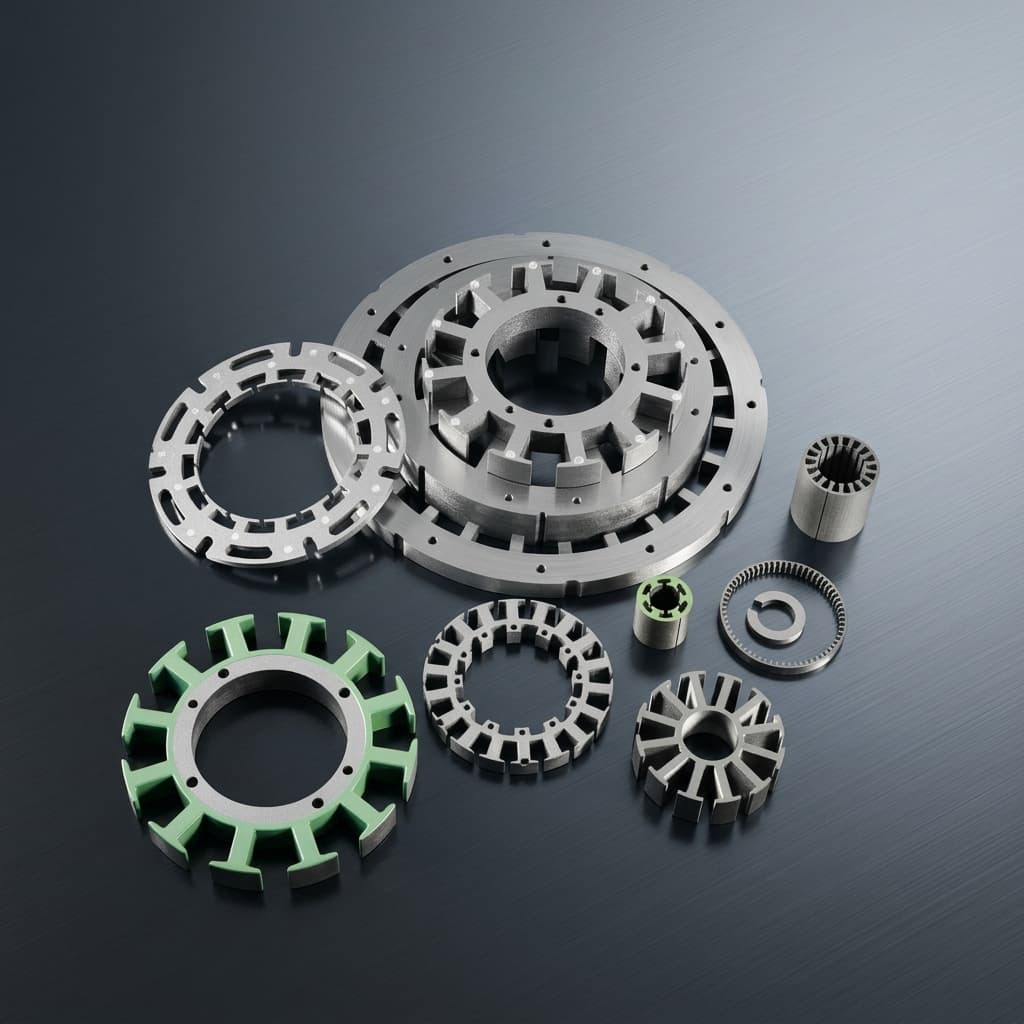
Thermal Management in Axial Flux Motors: Direct Oil Cooling and Stator Core Design
Engineering guide to axial flux motor thermal management, direct oil cooling, SMC stator design, validation risks, supplier evidence, and RFQ checks for buyers.
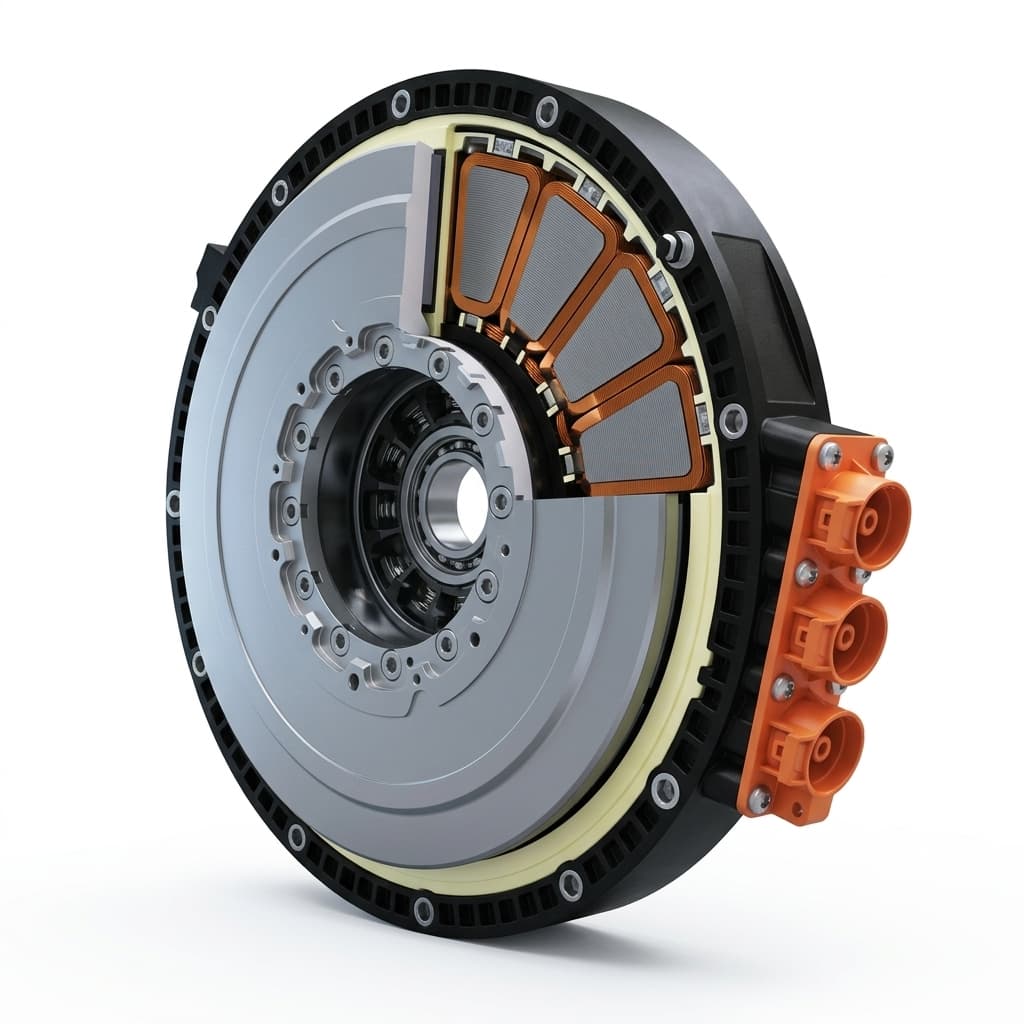
Mercedes-Benz Launches Large-Scale Axial Flux Motor Production: What It Means for the Supply Chain
Mercedes-Benz axial flux motor production in Berlin changes AFPM sourcing. See supplier tolerances, SMC stator risks, evidence gaps, and RFQ actions.
SMC vs. Laminated Steel for Axial Flux Motor Cores: A Procurement & Engineering Guide
An in-depth guide for procurement teams and engineers evaluating Soft Magnetic Composites (SMC) against laminated steel for axial flux motor cores.